What Should a Viking Market Scene Include to Feel Real?
A Viking market should feel like a working place, not a costume parade. Its visitors need somewhere to land, things to buy and sell, and a reason to keep moving through the crowd. The best scenes make those practical details visible: a boat unloading cargo, a stallholder weighing metal, a child threading between baskets, a dispute drawing curious onlookers.
That kind of crowded market atmosphere is built from observation rather than sheer volume. More people and props can make a scene look busy, but they cannot make it feel lived in unless the objects, sounds and behaviour belong together. Whether you are designing a game level, planning a film set or writing a historical scene, start with the place and its purpose.
Begin with a harbour, not a heap of props
Many Scandinavian trading places were closely tied to water. Boats carried people and goods, so a harbour gathering scene can establish a great deal before anyone speaks. Show a shoreline or landing place, vessels close enough to unload, and a route from the water to the settlement. The market might occupy a sheltered beach, a quay or an open area near houses and workshops; it need not resemble a modern stone-paved port.
Ships are powerful shorthand, but they Click for more info should not simply sit in the background as decorative symbols. Make them part of the action. A crew might carry sacks ashore, check a mooring, repair a sail or argue over whose cargo is being unloaded first. The vessel’s scale and construction should suit its job: a swift warship is not automatically the right boat for hauling a heavy load of trade goods.
Settlements, too, need practical texture. Timber buildings, fences, sheds, workshops and open spaces can suggest a community without turning every view into a wall of grand halls. Let the market spill into its surroundings. A smith’s work area may be noisy and smoky; a household yard may offer somewhere to mend a net or mind a child. These small connections make the market feel like part of everyday life rather than a temporary stage set.

Use trade goods props to tell a story
The most convincing trade goods props are not just recognisable objects. They suggest where something came from, who handled it and what someone might want for it. A stall of identical, pristine wares looks arranged for a camera. A mixed display—with a few items wrapped, a container partly empty and some goods waiting to be weighed—suggests an exchange already under way.
Useful objects might include cloth, combs, beads, metal fittings, pottery, wooden vessels, tools, foodstuffs or bundles of raw material. Their exact mix should fit the setting and the story. A northern market might draw on local products as well as goods brought by travelling merchants, but avoid treating every Scandinavian settlement as an identical catalogue of exotic imports. Trade varied over time and place.
Give the props different jobs in the scene. A set of weights and a balance can make a transaction legible at a glance. A knife or tool may be there to demonstrate a product; a wooden chest may protect valuables; a woven basket may carry ordinary provisions. If everything is an ornate treasure, the market stops feeling like a place where people actually make a living.
Make transactions visible
Markets are social systems as much as collections of merchandise. Let people inspect goods, bargain, measure, exchange, carry and refuse. A buyer might test a blade’s balance or feel the quality of cloth. A seller could point out a flaw—or conceal one. A merchant may keep an eye on the crowd while a helper serves customers. These actions provide a natural rhythm and keep the scene from becoming a row of extras staring into space.
Consider who has access to which goods and who is doing the work. The person displaying an object may not be its maker, and the person carrying a bundle may not own it. Tradespeople, household members, visitors and ship crews all give the market a wider social life. Not every character needs a line of dialogue; a few clear actions can suggest relationships and tensions.
Build a crowded market atmosphere through sound and movement
A believable crowd has patterns. People cluster around a sale, leave a path for someone carrying a load, pause to watch a commotion and then continue on. Give the space a main flow of movement, with smaller pockets of activity around stalls, boat landings and work areas. This helps audiences understand where they are and gives actors or players room to navigate.
Sound can add depth, but it should be layered rather than relentlessly loud. Imagine conversations overlapping with the scrape of a hull, the thud of cargo set down, an animal calling or a craftsperson working nearby. In film, a few carefully chosen sounds can imply a larger settlement beyond the frame. In a game, ambient audio can respond to the player’s position, becoming more distinct near a workshop or a busy stall.
Weather and ground matter as well. Damp wood, trampled earth, wind tugging at cloth and smoke shifting through the space make a market feel exposed to the elements. You do not need to cover every surface in mud or make every character grimy. The aim is variation: a working environment with clean and worn areas, dry and wet patches, and objects that show use.
Games and film establish a setting at different speeds
Games often need to establish a place quickly because players must understand where they can go and what they can do. A ship at the shore, a visible route into the settlement, a recognisable market hub and a few active stalls can communicate “harbour town” within moments. Landmarks also help with navigation: a tall mast, a distinctive building or a cluster of brightly coloured cloth may guide the player without a spoken explanation.
Film can take a more controlled route. A wide shot might introduce the shoreline, followed by close details: hands weighing a piece of metal, a wet rope pulled tight, a child looking up as a vessel arrives. The edit can move from the overall place to a single exchange, letting the audience infer how the market works. If every shot announces “Vikings!” with a shield, an axe and a dramatic ship, the visual language becomes repetitive rather than informative.
Element What it tells the audience How to keep it grounded Ship at the landing The settlement is connected to travel and trade Show it being moored, unloaded or maintained Weights and balance Goods are being measured and valued Put them in use during an exchange Shields near the crowd People have equipment for protection or conflict Keep them attached to people or stored sensibly, not scattered as decoration Workshop activity The market belongs to a working settlement Show a craft in progress and its tools nearbyVisual vocabulary: ships, shields and settlements
Ships, shields and settlements form a useful visual vocabulary, but each should communicate something specific. A shield can be carried, leaned against a wall or stored with other equipment. It need not appear on every person. Its condition can also tell a story: a well-used shield is different from one newly made for ceremony or display.
Likewise, settlements should look inhabited rather than arranged as a row of picturesque façades. Think about entrances, working spaces, storage and routes between buildings. A narrow path may funnel the crowd; an open yard may accommodate unloading. If the market is temporary or seasonal in your chosen setting, make that visible through portable stalls and goods brought in by visitors rather than assuming a permanent, uniform market street.
Historical references can help teams separate strong evidence from familiar https://highstylife.com/how-do-i-compare-two-viking-games-that-look-totally-different/ screen imagery. A reference board might bring together archaeological finds, site plans, landscape photographs and notes on material culture. HistoryMedieval can be one starting point for browsing historical topics, while a brief developed for a brand or publisher such as Mr Q or MrQ should still identify the particular period and place it wants to evoke. Names and mood boards are not substitutes for checking what the objects are meant to represent.
The horned helmet myth—and why it persists
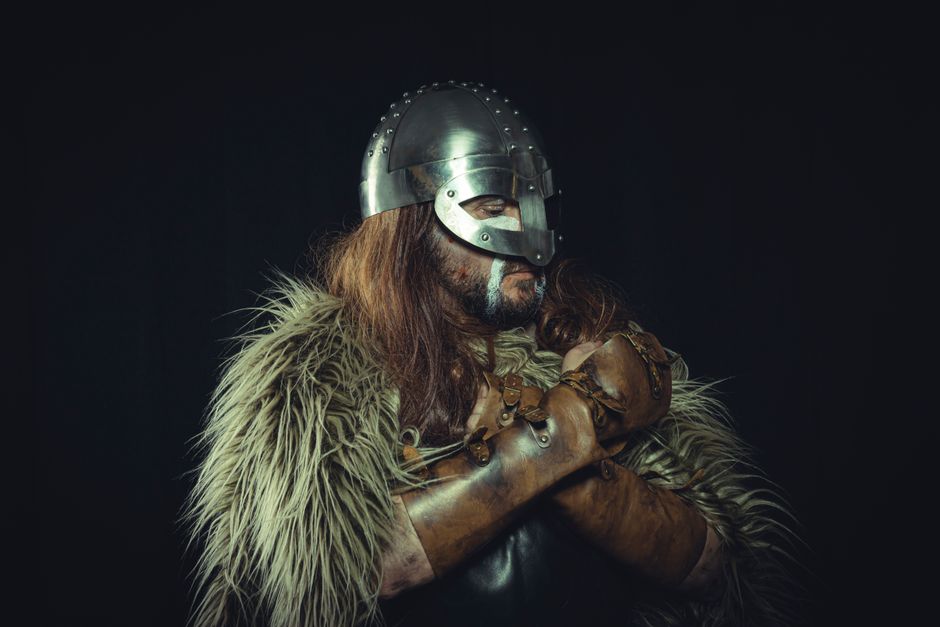
The horned Viking helmet is one of the most recognisable images in popular culture and one of the least useful shortcuts to historical accuracy. There is no good evidence that Viking-age warriors routinely wore horned helmets in battle. Horns would be awkward and vulnerable in a fight, and they are not supported by the best-known archaeological helmet evidence from the period.
So why does the image survive? It is visually immediate. Horns make a head silhouette easy to recognise from a distance, and they communicate “ancient warrior” without requiring context. Later art, theatre and popular entertainment helped cement the look. Once an image becomes familiar, it can feel historically true simply because audiences have seen it so often.
That familiarity can be useful if a production is deliberately playing with legend, comedy or a stylised fantasy world. But in a grounded market scene, a horned helmet is likely to distract from the more interesting details: who is trading, how the settlement is arranged, and what people carry. If characters need head protection, use designs supported by evidence for the period and region, or make the uncertainty clear when the story calls for interpretation.
Gjermundbu: a reality check
The helmet finds from Gjermundbu in Norway offer a helpful reality check. The Gjermundbu helmet is the best-known surviving example of a Viking-age helmet, dating to the tenth century. Its distinctive construction, including a protective framework and face guard, looks very different from the familiar horned fantasy version. It is an important reference, but it should not be treated as proof that every Viking wore an identical helmet: preservation is uneven, and a single find cannot represent every person, place or century.
For a market scene, this distinction matters. A helmet is not a compulsory costume piece for every adult man in view. The setting is a place of exchange and daily activity, not necessarily a battlefield. If a helmet appears, give it a reason to be there—perhaps it belongs to a traveller or is being repaired—rather than using it as a universal badge of Viking identity.
A practical checklist for a convincing scene
- Establish the relationship between water, landing place, market and settlement.
- Choose trade goods that fit the place, period and people in the story.
- Show transactions and work in progress, not just objects on display.
- Give the crowd believable routes, clusters and pauses.
- Use ships, shields and buildings with a clear purpose in the frame.
- Avoid using horned helmets as historical shorthand.
- Use the Gjermundbu helmet as a useful reference, not a universal template.
The heart of a convincing Viking market is not a single “Viking” prop. It is the relationship between people, place and work: boats bringing goods in, hands sorting and weighing them, neighbours watching the bargains, and a settlement carrying on around the exchange. Get those relationships right and the scene can feel bustling without becoming cluttered, and historically suggestive without pretending that every detail is certain.
For readers collecting references, use the Print Article (PDF/print function) to keep a copy alongside your research notes, or use the Facebook share option to pass the article on to a production team, history group or fellow world-builder.